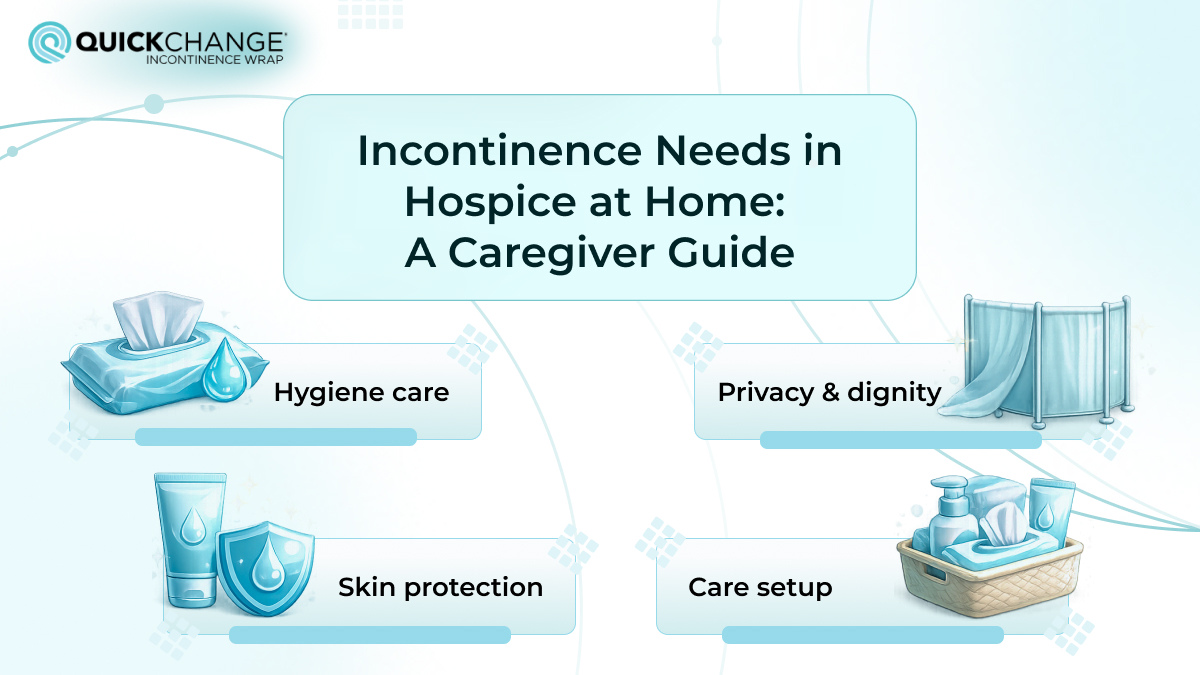
Urinary incontinence is common at the end of life and is often associated with serious, progressive illnesses. In hospice care, it is understood as part of the natural physical changes that occur as the body declines. Bladder control problems may develop gradually or appear suddenly, which can cause concern, but they do not indicate poor care or treatment error.
The primary goal of hospice care is to provide comfort, manage symptoms, and preserve the patient’s dignity during a terminal condition. Hospice care aims to reduce physical and emotional distress and to support comfort as care needs change. This approach helps set realistic expectations for care and allows urinary incontinence to be viewed as a natural part of the condition rather than an additional complication. In hospice settings, urinary incontinence is managed as part of symptom control, with attention to comfort, dignity, skin protection, and emotional reassurance rather than strict continence correction.
What Is Hospice Care?
Hospice care is a specialised model of palliative care focused on comfort, quality of life, and compassionate support rather than curative treatment. It is provided when a person is living with an advanced, progressive illness and the goals of care have shifted from prolonging life to supporting physical comfort, dignity, and emotional well-being.
This type of care is provided by a multidisciplinary team that addresses physical needs, manages symptoms, and attends to emotional, psychological, and practical concerns as they arise. This approach recognises that comfort, reassurance, and respect are central priorities during the terminal condition.
Hospice services adapt as a person’s condition changes, ensuring that care remains responsive and individualised. By creating a calm and supportive environment, hospice care helps people feel protected and respected, allowing them to manage symptoms and daily challenges within the broader context of end-of-life support rather than in isolation.
Hospice Care vs Palliative Care: What’s the Difference?
Palliative care and hospice care are both centred on comfort, symptom relief, and quality of life, but they are used at different stages of illness and within different care goals. While palliative care may be provided alongside curative treatment and at various points in the disease process, hospice care is intended for people with advanced illness, when treatment is no longer focused on cure and care shifts fully toward comfort and support. These distinctions are further illustrated below, showing how hospice care fits within the wider framework of supportive and comfort-focused care.
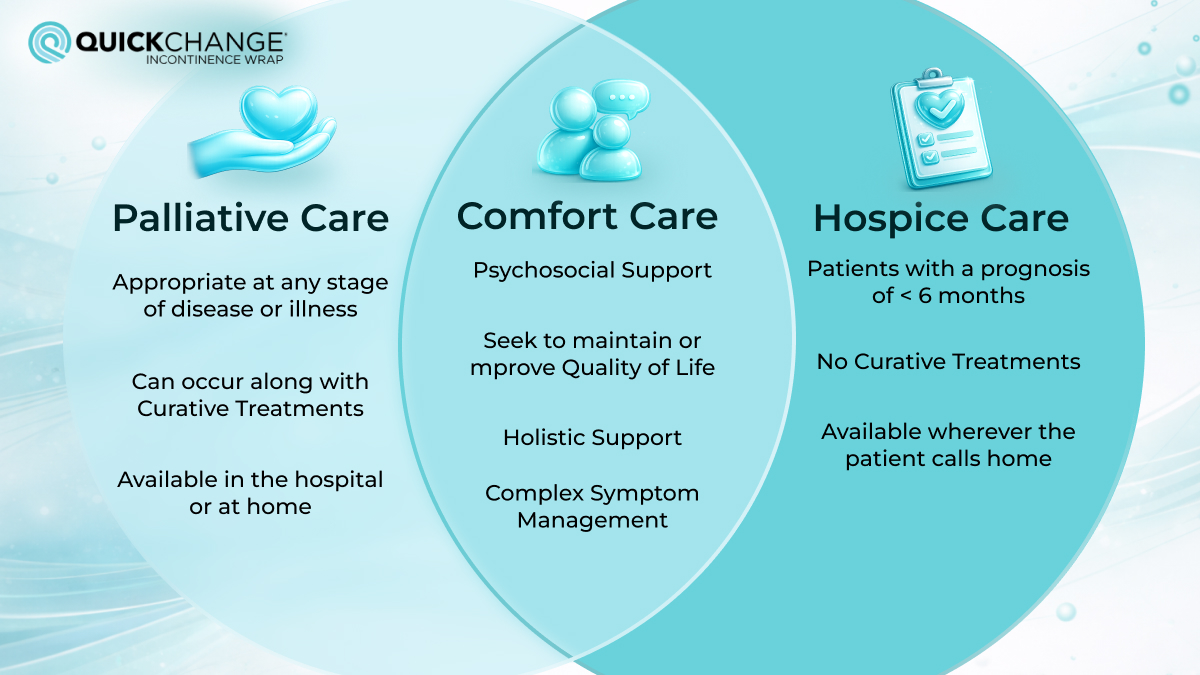
While both models emphasise quality of life and compassionate care, hospice care represents a more focused approach for people with progressive illness, guided by comfort-centred goals.
Why Urinary Incontinence Occurs at the End of Life
Bladder control problems in hospice care are usually associated with complex changes that occur in the human body at the end of life. Incontinence rarely has a single cause and is most often the result of a combination of several factors that gradually affect the body's ability to regulate urinary function. Common factors include:
-
Progressive muscle weakness, particularly weakening of the pelvic floor muscles;
-
Neurological changes that affect bladder control;
-
Reduced mobility or prolonged bed rest, which makes it difficult to get to the toilet in time;
-
Side effects of medications used to relieve pain or other symptoms;
-
General decline in organ function, characteristic of the late stages of the disease.
Such end-of-life bladder falls are typical for hospice care and do not indicate a sharp deterioration in care. Understanding the causes helps to perceive urinary incontinence as part of the overall course of the condition and forms the basis for a further symptomatic approach by the hospice team.
How Hospice Handles Urinary Incontinence
Hospice care views incontinence as a symptom that requires constant attention and a flexible approach, rather than a condition that needs to be corrected or strictly controlled. For this reason, hospice incontinence management is understood as a process that adapts over time in response to the patient’s condition. According to the National Institute on Aging, “hospice care focuses on comfort and quality of life rather than curative treatment.” Within this care model, symptom management remains a central part of end-of-life support.
Continence care within hospice settings is guided by regular assessment and adjustment as the person’s condition changes:
-
Individual assessment of symptoms and the patient’s level of comfort;
-
Regular reassessment as the condition evolves;
-
Prioritising comfort rather than correction or restriction;
-
Prevention of skin damage and reduction of physical and emotional distress.
Role of the Hospice Team in Managing Urinary Incontinence
Responsibility for continence care is carried by a multidisciplinary hospice team that coordinates assessment, planning, and day-to-day care. Urinary incontinence is considered a clinical and sensitive issue that requires professional interaction, coordinated action, and attentive consideration of the patient's needs.
Within this approach, roles are clearly distributed among hospice team members, and care is constantly adapted to changes in the person's condition. Team members work collaboratively to monitor changes, adjust care plans, and coordinate daily support as needs progress.
Hospice Nurse Incontinence Care
As part of hospice care, nurses are key members of the multidisciplinary team and often serve as the primary contact person, monitoring the patient's condition daily and providing direct care for incontinence. Hospice nurse incontinence care combines clinical supervision with a sensitive, respectful attitude towards the person, which is especially important at the end of life. The main aspects of a hospice nurse's work include:
-
Regular monitoring of changes in continence and the patient's general condition;
-
Performing hygiene procedures in a gentle, considerate manner;
-
Adjusting the care plan as the disease progresses;
-
Supporting physical comfort and ensuring privacy during care.
This approach helps to reduce physical and emotional discomfort and promotes a sense of security and trust.
Maintaining Dignity in Hospice Care
The issue of dignity is central to end-of-life care, especially when it comes to sensitive issues such as incontinence. Understanding dignity in end-of-life care goes beyond physical comfort and encompasses respect for the patient's personality, privacy, and emotional state. This approach helps ensure that individuals do not feel exposed or diminished as a result of changes in bodily control.
Maintaining dignity is particularly important as it directly affects psychological well-being and feelings of security. A sensitive and respectful approach helps to reduce the shame, anxiety, and feelings of vulnerability that often accompany incontinence. The key elements of dignified continence care include:
-
Ensuring privacy during all care procedures;
-
Clear, calm, and respectful communication;
-
Avoiding unnecessary exposure and situations that may cause embarrassment;
-
Acknowledging emotional discomfort without judgment or devaluation;
-
Supporting patient autonomy as much as possible.
This approach helps to maintain a sense of respect for the individual even in difficult physical circumstances and emphasises the humane nature of hospice care.
Family Support in Hospice Incontinence Care
The family staying with the hospice is not considered the primary provider of end-of-life care services. Professional responsibility for organising and performing procedures remains with the hospice team, while loved ones receive support and guidance aimed at reducing anxiety and forming realistic expectations about changes in the patient's condition. The family is helped to better understand the care process and focus on emotional presence and support, without feeling the pressure of responsibility for performing medical procedures.
Psychological Impact of Urinary Incontinence
Urinary incontinence can have a significant emotional impact on a person in hospice care, especially when combined with a general deterioration in physical condition. The psychological impact often extends beyond physical discomfort, affecting a person’s sense of autonomy and personal boundaries. Emotional effects may include:
-
feelings of loss of independence;
-
feelings of shame, vulnerability, or awkwardness;
-
increased anxiety or tendency towards social withdrawal.
Hospice teams respond to these challenges by creating an atmosphere of support, reassurance, and emotional security. Through attentive communication, respectful treatment, and preservation of dignity, care is focused not only on physical needs but also on the psychological comfort of the patient.
Hospice Continence Products and Supplies
Throughout hospice care, continence products are selected not as a universal solution, but based on the patient's condition, level of mobility, and overall comfort. Hospice continence products and supplies are used as tools to maintain hygiene, protect the skin, and reduce physical and emotional discomfort. Most often, these are absorbent products for leakage control, products for protecting the skin from irritation, and solutions for keeping bedding and surfaces clean. All of these incontinence products for hospice patients are used as part of comprehensive care coordinated by the hospice team.
Modern solutions that help simplify care and reduce physical strain during procedures also play an important role. For example, solutions such as QuickChange Wraps are designed to make changing continence aids faster and more delicate, with minimal patient movement. This approach promotes comfort, preserves dignity, and helps hospice care teams provide more peaceful and organised care in their daily practice.
Learn how QuickChange Wraps can be integrated into everyday continence care routines to support comfort and dignity with minimal disruption. Trial packs are available for home care settings, allowing families and care teams to assess comfort and suitability in real-life conditions. Professional sample options are also offered for healthcare and care facilities to support evaluation within established care routines.
Practical Hospice Care Tips for Urinary Incontinence
Practical treatment of incontinence in hospice care often involves small daily adjustments rather than fixed procedures. Practical recommendations in this context help to navigate the care process without reducing it to fixed algorithms. In everyday hospice care practice, this usually means:
-
being prepared for changes in the patient's needs over time as a normal part of care;
-
prioritising comfort over strict schedules and established routine decisions;
-
open and calm communication with the hospice team for timely adjustment of the approach;
-
attentiveness to the pace and manner of care procedures.
By taking a leisurely pace, explaining each action, and respecting personal boundaries, it is possible to maintain a sense of security and dignity even in difficult situations. It is these small but consistent actions that shape the overall hospice care experience.
Conclusion
Urinary incontinence is one of several changes that may occur toward the end of life and is addressed within the broader goals of hospice care. Hospice teams assess and manage symptoms in a way that prioritises comfort, dignity, and emotional reassurance while remaining responsive to what is clinically appropriate for each individual.
Through attentive care, clear communication, and thoughtful daily routines, hospice teams help create a sense of safety and respect even in physically challenging circumstances. Practical solutions, such as QuickChange Wraps, can support this approach by reducing physical strain, limiting unnecessary movement, and allowing greater focus on comfort and dignity in everyday care.

FAQ
Does hospice manage urinary incontinence?
Yes, managing incontinence is part of comprehensive hospice care. Hospice teams assess symptoms, adapt their approach as conditions change, and focus on patient comfort. The goal is not to completely control symptoms, but to reduce discomfort and preserve dignity.
How does hospice handle incontinence differently from hospital care?
Hospice care has a different focus than inpatient treatment. Rather than emphasising invasive interventions or strict symptom control, the hospice approach is based on symptomatic care, delicate procedures, and constant consideration of the person's emotional state. Comfort and peace of mind take priority over medical indicators.
Is incontinence at the end of life always expected?
Urinary incontinence often, but not always, occurs at the end of life. It depends on the underlying disease, overall health, and level of mobility. When incontinence at the end of life occurs, hospice teams accept it as an expected part of the process and adjust care accordingly.
How is patient dignity preserved when incontinence occurs?
Preserving dignity is based on privacy, respectful communication, and sensitive procedures. Hospice staff explain their actions, avoid rushing, and support patient autonomy as much as possible. Urinary incontinence dignity at the end of life is considered an important aspect of overall respect for the individual.
What role do families play in hospice incontinence care?
Families are not expected to provide continence care in hospice settings. Instead, their role focuses on emotional presence and support, while hospice teams manage care and provide guidance to help families feel informed and reassured.
What to expect with incontinence in hospice care over time?
Over time, a patient's needs may change, and hospice care will adapt accordingly. You can typically expect regular symptom reviews, open communication with the team, and a consistent focus on comfort and dignity. This is what makes for a predictable and peaceful approach to care.
This content is for informational purposes only and is not intended as a substitute for professional medical advice, diagnosis, or treatment. Always seek the advice of your GP or other qualified health provider with any questions you may have regarding a medical condition. Never disregard professional medical advice or delay seeking it because of something you have read or seen here.