During palliative care, changes in a patient’s urination and urinary incontinence may be caused by the underlying disease or a consequence of comorbid conditions. In some cases, symptoms worsen gradually, while in others they may occur quite suddenly, creating additional stress for the patient and family.
Whether care is provided at home or in a clinical setting, these changes can affect daily routines and require thoughtful adjustments. Understanding potential causes and available support options helps caregivers adapt routines more effectively and respond to changes as they arise. In this article, we explore how urinary incontinence appears in palliative care and the practical approaches that will support daily comfort.
Changes in Bladder Control During Palliative Care
During palliative care, urinary incontinence usually occurs as part of the general changes associated with serious illness, rather than as a result of an isolated bladder disease. As the disease progresses, the body gradually loses its ability to respond to urges as before, especially when weakness, pain, medication, and limited mobility are combined. That is why bladder problems during palliative care can differ from person to person and change over time. Most often, incontinence is associated with the following factors:
-
limited mobility and general weakness, when it is difficult for a person to get to the toilet in time;
-
cognitive changes, including confusion or delirium;
-
overactive bladder with frequent or sudden urges;
-
urinary tract infections, which may have atypical manifestations in the later stages of the disease;
-
urinary retention with overflow incontinence, particularly in cases of prostate problems or neurological conditions;
-
side effects of medications and constipation, which interfere with normal bladder emptying.
Changes in continence, including increased frequency of leakage, increased volume of leakage, or new-onset incontinence, should prompt medical review. The same applies if urination is painful, causes burning, or is accompanied by fever or blood in the urine, as these signs may point to infection or other treatable issues.
The Role of Continence Support in Palliative Care
Continence support plays an important role in everyday comfort for people receiving palliative care, particularly when care is focused on symptom relief rather than curative treatment. Difficulties with bladder control can affect rest, sleep, mobility, and overall physical well-being, making daily routines more demanding for both patients and caregivers. According to the Palliative Care Network of Wisconsin, “Urinary incontinence has been reported in approximately 77 % of cancer patients receiving palliative care and 72 % of patients in hospice settings, and is associated with decreased quality of life and additional challenges in daily care.”
For this reason, well-organised continence care helps reduce skin irritation caused by constant moisture and friction, while also easing emotional strain. When incontinence is managed with a clear and tactful approach, patients are more likely to feel supported and at ease, and families often experience less stress in everyday care.
Practical Strategies for Managing Urinary Incontinence in Palliative Settings
Managing incontinence often calls for a practical and flexible approach as care needs change. Decisions must take into account the patient's physical condition, level of mobility, care conditions, and available resources, as needs may change over time. Effective care is usually based on several key areas, including observation and planning, as well as the correct selection of products and daily skin care. These elements form the basis for further decisions during palliative care.
To make incontinence care in palliative settings more consistent and less stressful, it helps to start with simple observations. These observations focus on when leakage occurs and how noticeable it is. Any discomfort, burning, or changes in odor or colour should also be noted. It is also useful to note how the person moves (independently or with assistance) and the overall condition of the skin. The strategies below help to find a solution faster and understand whether palliative care urinary symptoms are changing.
-
Strategy 1: Assessment & planning
Start with a short observation period (2-3 days) to understand when and under what conditions leakage occurs and how often the products need to be changed. Based on this, a simple plan is formed, including times for checks, assistance with toileting or bedpans, and nighttime routines.
If there are signs of infection or urinary retention in advanced illness (frequent small amounts, feeling of fullness, lower abdominal pain, leakage due to overflow), this should be discussed immediately with a healthcare professional, and it is important to address the cause, not just the symptoms.
-
Strategy 2: Choosing proper continence products and equipment
Incontinence products are selected based on the patient's mobility and care conditions. For bedridden patients, adhesive products are more commonly used, while for more active patients, briefs or pads may be more suitable.
When selecting continence aid products for palliative patients, it is important to consider the correct size, fit, and level of absorbency for day and night use. Male incontinence products, such as male pads or urological pads, may offer better leakage control. For people requiring prolonged bed rest, absorbent products are often used together with protective bed pads to help manage leaks and protect bedding.
-
Strategy 3: Skin protection as an ongoing priority
The focus of skin protection is not on more frequent washing, but on limiting prolonged exposure to moisture and friction, which are common causes of irritation and breakdown. Regular review of skin condition and prompt adjustments to products or routines help prevent discomfort and identify issues early.
By using these three strategies, it becomes easier to establish a stable daily routine and understand what works best in practice. This also creates a clearer basis for discussing care decisions with family members and healthcare professionals when symptoms change or become more difficult to manage.
Continence Products and Equipment: Choosing the Right Option
During palliative care, the choice of continence products and equipment depends on the patient's mobility, care conditions, and the nature of the leakage. Solutions should simplify daily routines and be easily adaptable as conditions change.
For people with limited mobility or those who require prolonged bed rest, incontinence products for bedridden patients are commonly used, including products with side fasteners that can be changed with minimal movement. For more active people, briefs or pads are suitable, and male incontinence products often provide a better fit and leakage control.
When selecting continence aid products for palliative patients, it is important to consider size, fixation, and absorbency for day and night use. Care often combines disposable incontinence products with reusable incontinence products or protective sheets as an additional level of protection, especially when using absorbent products for terminally ill patients.
Among the solutions that can support daily continence care are products such as QuickChange Wraps. They are designed to allow continence changes to be carried out quickly and discreetly, without lifting or repositioning the person and with minimal physical strain. This approach may help reduce disruption during rest or sleep, support caregivers during routine care tasks, and assist in maintaining skin cleanliness. For people with reduced mobility, limiting prolonged moisture and pressure is particularly important, as both can increase the risk of skin irritation and breakdown.
Discover how QuickChange Wraps fit into everyday continence routines and support comfort with minimal disruption. Our Trial packs are available for home care, making it easier to assess comfort and suitability in real-life conditions. Our Professional sample options are also available for healthcare and care facilities to support evaluation within established care routines.
Skin Protection, Hygiene, and Infection Risk Management
Skin of palliative patients with incontinence is often more vulnerable due to limited movement, reduced blood circulation, and repeated exposure to moisture. When mobility is reduced, pressure on the same areas of the body increases, and moisture tends to remain in contact with the skin for longer periods, raising the risk of irritation and breakdown.
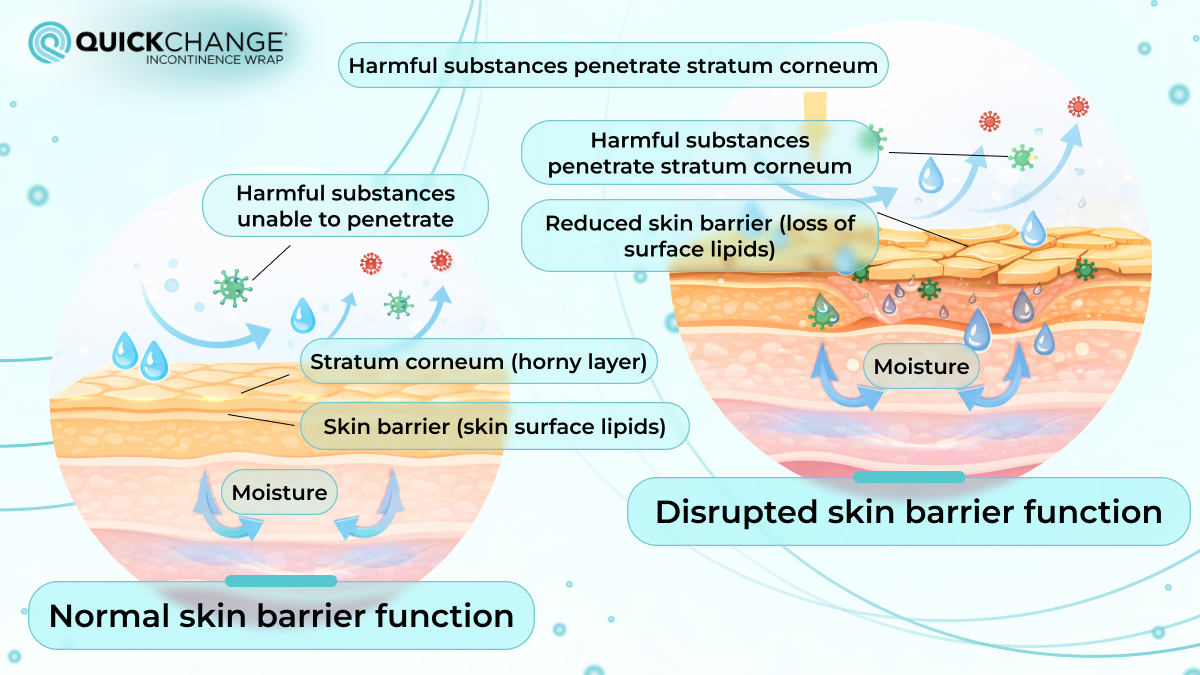
For this reason, skin care for incontinent patients should be treated as an integral part of continence care, not only as a step after changing absorbent products. Even brief contact with urine can irritate fragile skin, particularly in areas exposed to prolonged contact and limited airflow. The illustration below shows the difference between intact and disrupted skin barrier function, highlighting how prolonged moisture and loss of surface lipids allow irritants to penetrate the skin and increase the risk of irritation and breakdown.
Maintaining careful hygiene and regular skin care helps preserve skin integrity and reduces the risk of infection. It is usually sufficient to use mild, fragrance-free products and dry the skin thoroughly, and protective creams or barrier products can also be used if necessary. When caring for people with incontinence, it is also important to pay attention to any changes in skin condition. For example, increased odor, burning, or redness may indicate various irritations, infection, or the need to adjust the usual care routine.
Tips for Caregivers: Daily Routine and Planning
When routines are simple and predictable, daily continence care becomes easier to manage. Continence care at home for terminal illness becomes less stressful when check-ups, hygiene, and changing supplies are coordinated and do not happen in a rush, especially at night.
It is also worth thinking about incontinence supply planning for palliative care. Having the necessary supplies on hand allows you to respond quickly to changes in condition and maintain a stable rhythm of care without additional stress for the patient and caregivers. You can find an example of a daily routine below: This type of routine can be adjusted over time as needs change, helping caregivers stay organised while maintaining comfort and dignity in daily care.
|
Time of day |
Morning |
During the day |
Before bedtime |
If the person is bedridden |
| Key care actions |
Hygiene, skin inspection, application of barrier protection, replacement of absorbent products |
Scheduled checks every 2-4 hours (or as needed), especially after meals or diuretic use |
High-absorbency nighttime product, bed protection, accessible light, or call bell |
Gentle repositioning according to schedule (as tolerated) to reduce the risk of pressure sores |
Incontinence Supply Planning in Palliative Care
When necessary products run out suddenly, it can complicate routines and create additional stress for both patients and caregivers. That is why it is necessary to assess needs in advance and maintain a stable care routine, and this assessment can be done using the simple table below:
|
Product |
Average consumption per day |
Approximate weekly supply |
When to replenish |
|
Absorbent briefs or pants |
4-8 pcs. |
28-56 pcs. |
When there are < 2-3 days left |
|
Bed pads or protective sheets |
1-4 pcs. |
7-28 pcs. |
As required |
|
Cleansing wipes or skin cleanser |
1 pack/week |
1-2 pcs. |
Based on usage |
|
Barrier cream or protective spray |
1 tube/month (approximately) |
1 pack |
Before supplies run out |
|
Disposable gloves or disposal bags |
As required (during each change) |
1-2 packs |
When supply runs low |
This simple approach to planning does not require precise calculations, but it gives a clear idea of actual costs, and it is convenient to periodically review and adjust the table, as needs may change over time. This helps to focus on caring for the person rather than constantly monitoring supplies.
Communication and Dignity: Talking About Incontinence with Patients and Families
Open conversations about incontinence are an essential part of palliative care. The way this topic is discussed directly affects the sense of security, dignity, and trust between the patient, family, and caregivers. When communicating, it is important to create a calm and supportive atmosphere in which the person does not feel ashamed or pressured. Even small changes in the tone of conversation and approach to care can help maintain a sense of comfort and dignity. The following approaches usually help to achieve this:
-
Frame conversations around what feels comfortable and manageable for the person;
-
Asking questions focused on comfort and well-being rather than control;
-
Agreeing in advance on who will help with care and how they will assist;
-
Providing privacy during hygiene procedures whenever possible, even in a medical setting;
-
Briefly explaining your actions before performing them can reduce anxiety.
For family and loved ones, support for caregivers in palliative incontinence care also means being able to openly discuss difficult issues with each other. Aligning expectations, sharing responsibilities, and making joint decisions help reduce emotional stress and maintain a more peaceful caregiving environment.
When Medical Support May Be Needed for Urinary Symptoms
During palliative care, not all incontinence problems can be solved simply by changing routines or care products. In some situations, palliative care urinary symptoms may indicate a condition that requires medical evaluation. Recognising these signs early helps prevent unnecessary pain or complications. It is worth contacting a doctor or palliative care nurse if the following signs appear:
-
Suspicion of urinary retention in advanced illness (frequent small amounts of urine, feeling of fullness, tension, or pain in the lower abdomen);
-
sudden increase in incontinence for no apparent reason;
-
pain, burning, blood in the urine, or a strong, unpleasant odor;
-
fever, confusion, or sudden weakness;
-
significant deterioration of skin condition that does not improve with standard care.
The use of a catheter in palliative care can also be considered. It is often used in cases of persistent urinary retention, severe discomfort, or when frequent changes of absorbent pads become somewhat uncomfortable for the patient. This decision is always made on an individual basis, taking into account the patient's overall condition, prognosis, and comfort priorities, and requires regular monitoring and proper care.
Conclusion
Incontinence during palliative care often reflects broader changes in a person’s physical condition, mobility, and daily functioning. As needs alter, understanding urinary symptoms and responding to changes helps organise daily care more effectively and maintain a stable, predictable routine for both patients and caregivers.
For people with advanced illness who experience incontinence or limited mobility, appropriately selected care products can make everyday routines more manageable and reduce stress during continence care. Solutions such as QuickChange Wraps allow continence changes to be carried out with less repositioning, supporting cleanliness, comfort, and dignity while easing the physical demands placed on caregivers.
FAQ
Is incontinence common in palliative care?
Yes, incontinence is quite widespread. It is not related to poor care and is often part of the course of the disease.
How to manage urinary incontinence in palliative patients?
Urinary incontinence in palliative patients is usually managed through a practical, day-to-day approach. This includes understanding possible causes, establishing a simple care routine, using appropriate continence products, maintaining regular skin care, and seeking medical advice when symptoms change or cause concern.
Does palliative care include continence management?
Yes. Palliative care incontinence and family support are part of the palliative approach because they directly affect comfort and dignity.
How can families support a patient with incontinence?
To provide support, it is necessary to ensure privacy, keep supplies on hand, adhere to a care routine, and ask the palliative care team for help when it becomes difficult.
Can incontinence be prevented in bedridden patients?
Not always completely. But you can reduce the frequency of “accidents” and complications: regular checks, proper supplies, skin protection, constipation control, and medical evaluation on time.
This content is for informational purposes only and is not intended as a substitute for professional medical advice, diagnosis, or treatment. Always seek the advice of your GP or other qualified health provider with any questions you may have regarding a medical condition. Never disregard professional medical advice or delay seeking it because of something you have read or seen here.