
Comparing Briefs, Wraps, Catheters, and Other Management Options
Selecting the right urinary incontinence product feels overwhelming, whether you are searching for yourself or as a caregiver for your loved ones. There are several options available, but a single product cannot meet every individual’s needs. Several factors should be considered while selecting the right incontinence product, which will be discussed in this article.

First Let’s Understand Male Urinary Incontinence
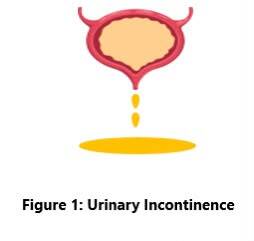
Urinary incontinence is involuntary urine leakage that can range from occasional dribbling of urine to complete loss of bladder control. A person may experience urinary leakage for a variety of reasons and in different circumstances. These may include:
- Limited Mobility
- Neurologic or muscular disorders
- Changes that occur following prostate surgery
- Urinary retention, when the bladder is not emptied completely
- Age-related changes
When To Contact a Healthcare Professional?
Urinary leakage can sometimes be a sign of an underlying health issue. It is a good idea to speak with a healthcare professional if:
● There is difficulty in urination or a feeling of not being able to empty the bladder completely
● Sudden onset of urinary leakage or gradual worsening
● Leakage occurs with pain or burning during urination or blood in the urine.
● Leakage occurs together with lower abdominal pain.
● Leakage is severe and is affecting quality of life
● Leakage occurs after surgery
● Leakage occurs with numbness, confusion and other neurological symptoms
After assessing medical concerns, there is a need to choose the right incontinence product that can meet an individual’s needs.
Why a Single Product Is Not Suitable for Everyone
Since mobility, severity and daily routines vary from person to person, no single product is suitable for everyone.
This article walks through different management options alongside a comparison of various factors that should be considered when choosing the right fit.
Choosing the Right Incontinence Product
As we discussed above, no single product is effective for every person. Selecting an appropriate incontinence product requires matching the product’s characteristics with the individual’s needs. The following factors should be considered before selecting a management option.
- Amount and frequency of leakage – Determine if leakage is occasional, frequent, moderate or heavy
- Mobility – Whether the person can walk, stand, transfer or turn independently or requires caregiver assistance
- Skin health and vulnerability to irritation – Whether the skin is prone to irritation and the degree of moisture exposure
- Fit and comfort – Ensuring the product fits properly without creating discomfort
- Cognitive ability – Consider whether the individual can recognize the need to urinate and remember when it is time to change the product
- Daily routine – Consider work, travel, sleep, clothing changes, and bathroom accessibility
- Caregiver needs – Evaluate the physical effort, repositioning and undressing required by a caregiver during changes
There are generally two broad categories for incontinence products
1. Absorbent Products:
These products absorb and contain urine within a garment or pad, helping manage urinary leakage and protect clothing and bedding from getting wet.
2. Urine Collection Products:
These products use external collection systems to divert urine away from the body into an external collection device.
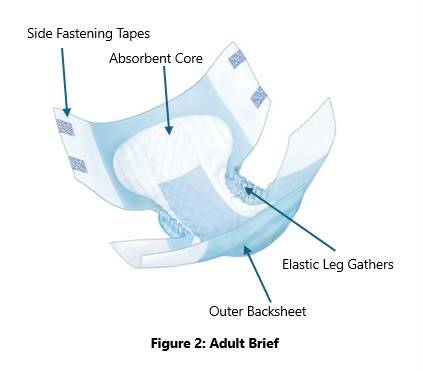
Adult Briefs
They are absorbent garments with fastening tapes on both sides for easy application.
May be Appropriate For: Individuals with moderate-to-heavy urinary incontinence, especially those requiring high absorbency products or caregiver support.
Advantages:
- Provides high absorbency with broad coverage
- Suitable for individuals who are bedbound or have limited mobility
Limitations:
- Prolonged exposure to urine can lead to skin irritation if the brief is not changed regularly
- For individuals who cannot change independently, caregiver assistance with repositioning may be required
Mobility Considerations:
-
Suitable for people with different levels of movement, though product changes can be physically demanding for individuals who require help with repositioning
Skin Considerations:
-
Regular checking and timely changes are important to protect the wide area of covered skin from moisture-related irritation
Caregiver Needs:
-
Individuals with limited mobility require caregiver assistance with positioning, clothing adjustment, removal, cleaning, and application of a new brief
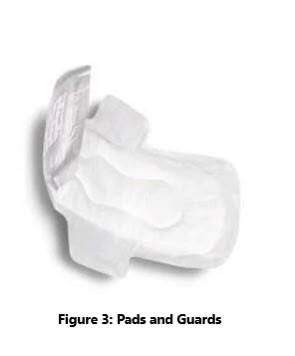
Pads and Guards
They are absorbent products designed specifically for male urinary leakage.
May be Appropriate For: Individuals with light-to-moderate urinary leakage, especially those who are mobile and can handle product changes independently.
Advantages:
- They can be worn discreetly under clothing with minimal disruption to daily activities
- Help support user independence for mobile individuals
Limitations:
- Provide less absorbent coverage than full briefs
- May leak if the pad shifts or is positioned incorrectly
- May not provide protection against heavy leakage
Mobility Considerations:
-
Well suited for people who can move independently as they can be worn inside supportive underwear and changed easily
Skin Considerations:
-
Covers a smaller area of skin than full briefs, though regular changes are necessary once the pad is wet
Caregiver Needs:
-
If the person can manage placement and change the guard independently, minimal caregiver support is required
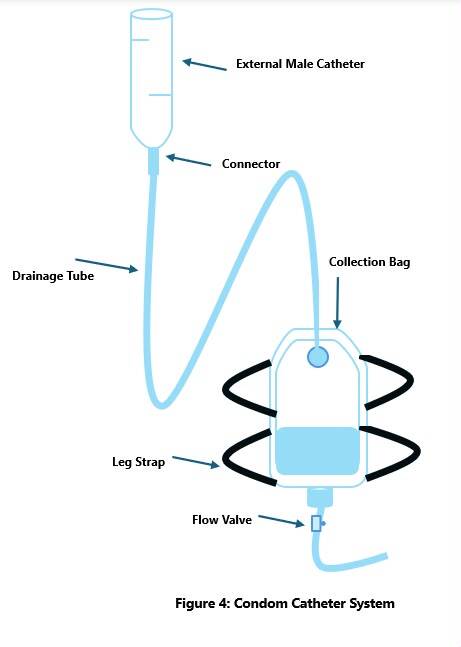
Condom Catheters
It fits over the penis and directs urine through tubing into a collection bag. It does not enter the urethra.
May be Appropriate For: People with continuous leakage who do not have urinary retention (when the bladder does not empty completely) or obstruction (blockage that prevents urine flow).
Advantages:
- Applied externally without being inserted through the urethra into the bladder
- Effective in preventing soiling of clothing and bedding
- Can reduce frequency of full garment changes as compared to briefs
Limitations:
- Requires accurate sizing and proper fit to avoid skin irritation
- Since the device stays outside the body, its infection considerations are different from those of a Foley catheter. However, the risk of skin irritation or infection still exists if the device is not fitted or taken care of properly
- Requires tubing and drainage bags that can limit mobility
- Leakage or displacement can take place if it is not properly sized or fitted
Mobility Considerations:
-
Both active individuals and those with limited mobility can use it when fitted and secured appropriately
Skin Considerations:
- Skin-to-moisture exposure is minimized as urine is directed straight into a collection bag
- The skin under the external catheter should be examined to prevent device-related irritation
Caregiver Needs:
-
The level of care depends on factors like the individual’s mobility, cognitive ability and ability to handle the device on their own
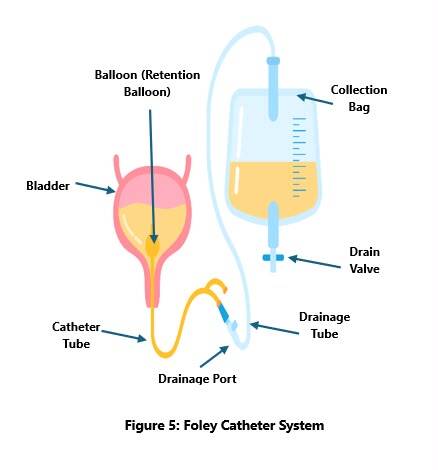
Foley Catheters
It is a thin tube placed through the urethra into the bladder to provide continuous drainage.
May be Appropriate For: Individuals with urinary retention (when the bladder does not empty completely) or those who require bladder drainage after certain surgeries. They are not usually the first-line choice for managing urinary incontinence.
Advantages:
- Enables continuous bladder drainage
- May be clinically suitable for people with selected medically complex conditions
Limitations:
- May cause discomfort and require careful insertion and removal to prevent any risk of urethral injury.
- Prolonged use may increase the risk of catheter-associated urinary tract infection (CAUTI), a urinary tract infection associated with the use of a catheter. As a Foley catheter passes through the urethra into the bladder, bacteria may enter the urinary bladder. Therefore, proper care and monitoring are important.
- Requires insertion and placement by a trained healthcare professional
- Agency for Healthcare Research and Quality (AHRQ) recommends that urinary catheters should not be used as a substitute for absorbent products (AHRQ, n.d.)
Mobility Considerations:
- Appropriateness depends on underlying medical reasons (such as retention or recent procedure) rather than the person’s mobility level
Skin Considerations:
- There is less direct skin exposure to urine as the catheter is placed internally, but insertion site and surrounding area require regular monitoring
Caregiver Needs:
- For insertion and removal, trained healthcare professionals are required
- May require caregiver support for ongoing care of the tubing, bag and insertion site
Male Wraps
Male wraps are external absorbent products made specifically for male urinary leakage. They provide localized absorbent protection around the area where urine is released, rather than broader coverage of a brief. The design, fit, and changing method vary by product.
May be Appropriate For: Individuals who require targeted absorbent coverage around the groin area, especially when limited mobility, caregiver support or ease of changing are key considerations
Advantages:
- Designed specifically for male anatomy to provide a closer, more targeted fit
- May require less clothing adjustment or repositioning, depending on the product design
Limitations:
- Provides less coverage than a traditional brief when managing heavier leakage
- Proper sizing and positioning are important to minimize leakage
Mobility Considerations:
- It can be used at different mobility levels; ease of changing depends on the person’s range of motion and the wrap design
Skin Considerations:
- They cover less skin than a brief, helping reduce the area exposed to moisture. However, regular skin checks and timely changes remain important
Caregiver Needs:
- A person’s mobility and wrap design determine whether the wrap can be changed independently or with caregiver assistance
How Does QuickChange Wrap Fit Into This Category?
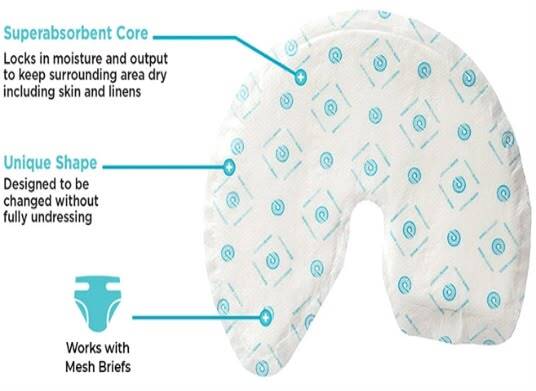
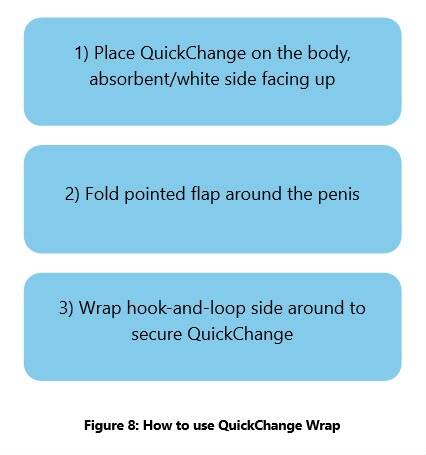
QuickChange is a specific type of external absorbent wrap for men. It offers targeted absorption like other male wraps, but its design and method of application differ from other male wraps in this category as it covers the penis directly and contact of urine is decreased with the skin.
QuickChange Wrap
The QuickChange Wrap is a specialized external absorbent male wrap designed to provide targeted management of urinary leakage. It covers the external urethral opening directly instead of covering the entire perineal area – skin around the genitals and anus - positioning the absorbent core close to the point of urine release.
However, proper placement and timely changes remain important for maintaining skin health.
May be Appropriate For: Individuals with urinary leakage who require help with product changes or have limited mobility.
Advantages:
- It is designed specifically for male anatomy, providing a more targeted fit
- The absorbent core is positioned close to the point of urine release
- Can reduce the amount of clothing that needs to be removed or adjusted during changes
Limitations:
- Effective leakage management requires correct positioning of the wrap
- Provides targeted rather than full coverage protection, so it may be less suitable when broader coverage is required
Mobility Considerations:
- May require less turning or repositioning during changes
Skin Considerations:
- Its design is intended to limit skin exposure to urine; however, regular skin checks and timely changes remain important
Caregiver Needs:
- Designed for simpler one-caregiver changes with less repositioning and undressing
Other Urinary Collection Devices and Alternatives
Absorbent products are not suitable for everyone with urinary leakage. Depending on individual needs, options like toileting strategies, external urine collection devices, or techniques to empty the bladder may provide better solutions, either on their own or alongside absorbent products.
1. Urinals
Best suited for: Individuals who can recognize the urge to urinate and handle toileting independently or with minimal help
- Handheld containers that provide a quick and convenient way for urine collection
- Reduces bathroom trips, which is helpful overnight or for people with restricted mobility
2. Bedside Commodes
Best suited for: Individuals with limited mobility who can transfer safely but struggle to reach the bathroom
- A portable toilet placed near the bed or chair
- Supports independent toileting while reducing fall risk
3. Scheduled Toileting
Best suited for: Individuals who may require reminders or assistance with regular toileting
- Uses a regular toileting schedule to help manage urinary leakage
- Helpful in reducing leakage episodes
4. External Collection Systems
Best suited for: Individuals experiencing continuous urinary leakage who require external urine collection
- Designed to direct and gather urine outside the body instead of absorbing in a pad
- May be useful for individuals with ongoing urinary leakage when the device can be properly fitted and managed by the individual or a caregiver
5. Intermittent Catheterization
Best suited for: Individuals experiencing urinary retention who are unable to empty their bladder naturally
- A catheter is inserted periodically to drain the bladder and then removed
- This technique is primarily used to fully empty the bladder of people experiencing urinary retention, rather than to contain leakage
Bottom Line
Understanding male urinary incontinence and different management options is important for individuals and caregivers to make informed choices. Since each individual has their own needs, no single product is suitable for everyone. The right choice depends on factors like the individual’s leakage pattern, comfort, daily routine, mobility, skin condition, and caregiver support. Each option comes with its own advantages and limitations. In some cases, a combination of approaches may be used to meet different needs. Speaking with a healthcare provider can help identify an appropriate management approach based on the individual’s circumstances.
References
Agency for Healthcare Research and Quality. (n.d.). Technical Interventions to Prevent CAUTI. Accessed August 26, 2026
Disclaimer: This article is for general informational purposes and is not a substitute for medical advice. Products and routines mentioned are intended to support incontinence management and do not treat or cure Alzheimer’s disease or any underlying medical condition. Please consult a healthcare professional for guidance specific to your situation.