Spinal cord injuries are always taken seriously since it is the main neural center of the body, damage to which can lead to significant dysfunction of the body's main systems. However, an injury such as spinal cord syrinx (a fluid-filled cavity within the spinal cord) can often be underestimated due to relatively inconspicuous symptoms at early stages.
As the cavity grows and expands, new symptoms appear and progress, significantly affecting the nervous system. That is why it is so important to recognize the symptoms early, diagnose the condition, and seek medical assistance.
Diagnosis of Syrinx of the Spinal Cord According to Personal Experience of Kortlund Natterstad
Kortlund Natterstad, a medical technology specialist and medical device consultant, has personal experience with a diagnosis of syringomyelia, and here is what he shares from his own perspective:

“My spinal cord was abnormally stuck (tethered), which disrupted the normal flow of spinal fluid. Over time, that pressure created a syrinx — a fluid-filled cavity inside my spinal cord. Not next to it, but inside of it. Left untreated, this thing doesn’t just sit there. It expands and can slowly affect neurological function. Unfortunately, there’s limited data based on subjectivity and lack of reporting, which is the unfortunate part, as people have them, and when they report it, some type of damage has been done. So doctors untethered my spinal cord and allowed the syrinx to collapse by adding a shunt (a small flexible tube with tiny holes to help fluid move freely <1 mm).”
Kortlund Natterstad had a serious crash in the past, which injured his spinal cord and led to paralysis. Today, he works as an engagement services consultant at the North American Spinal Cord Injury Consortium (NASCIC), an organization that supports people with spinal cord injuries. With his own experience, he works with people who have similar injuries, helping them through counseling, support, and collaboration with organizations involved in the rehabilitation and social adaptation of people with spinal injuries. He provided further information to draw the attention of people with spinal cord injuries to the importance of early diagnostics and treatment.
What is the Syrinx of the Spinal Cord? Spinal Syrinx Definition
Syrinx is a serious neurological disease that is often misunderstood, underestimated, or ignored. The most common cases of this disease being ignored include individuals with spinal cord injuries (SCI), Chiari malformation, spinal surgery, or a history of trauma, as they often accept the symptoms of a syrinx as part of their condition.
Syringomyelia, more commonly known as syrinx, is a term used to describe a fluid-filled cavity that forms inside the spinal cord. Initially, the disorder is imperceptible, but the cavity gradually expands, compressing nerve tissue, disrupting signal transmission, and causing progressive, sometimes permanent neurological deterioration. Even a small syrinx or very tiny syrinx can be clinically significant, depending on its location and effect on cerebrospinal fluid (CSF) dynamics.
What is a Tethered Spinal Cord?
Spinal tethering is primarily an abnormal fixation. A tethered spinal cord means that it is unnaturally attached and cannot move freely as it should. By its nature, the spinal cord should slide slightly when you move and float in the spinal fluid. When it is tethered, the following occurs:
- Regular movement creates tension.
- Tension disrupts the flow of spinal fluid.
- Pressure builds up.
- The spinal cord is impacted.
Tethered spinal cord symptoms that arise in response to this are often vague and progressive. They include increasing weakness, emerging sensory deficits, pain, spasticity, gait changes, and bladder or bowel dysfunction.
Consequently, tethering of the spinal cord disrupts the flow of cerebrospinal fluid, creates tension during movement, and significantly increases the risk of syringomyelia. So yes — your cord being “stuck” can literally cause it to hollow itself out.
Characteristics of Syrinx Symptoms
The most deceptive clinical aspect of syrinx is its slow progression. It progresses so slowly that symptoms appear gradually, almost imperceptibly, and can take years rather than months to become apparent. Since syrinx is caused by underlying factors, people often attribute its symptoms to “just the effects of spinal cord injury.” The most common signs of syrinx include:
- Recent or increased weakness
- Burning, tingling, or numbness
- Changes in the nature of pain
- Increased spasticity
- Severe loss of temperature sensation (my whole right arm felt freezing 24/7)
- Autonomic disorders (sweating, changes in blood pressure)
- Urinary incontinence
Because these changes are gradual, syrinxes are notoriously underdiagnosed until they’re large — sometimes giant.
Diagnosis and Treatment of Spinal Cord Syrinx
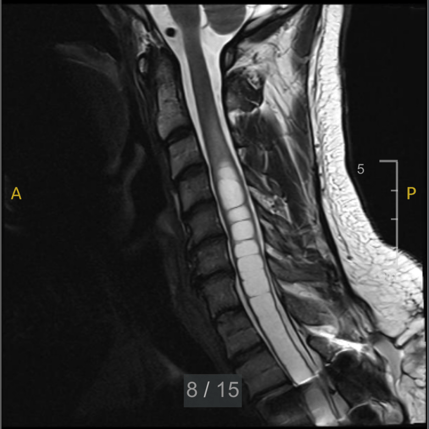
Diagnosis of syrinx is guaranteed through MRI. Using an instrument such as MRI, healthcare professionals can assess the size, location (cervical syrinx, thoracic syrinx, or other), and associated abnormalities, such as Chiari malformation or spinal cord tethering. Once detected, MRI is used serially to document progression.
Treatment of syrinx focuses on preserving function and protecting the nervous system. My surgery had two goals:
- Free the tethered spinal cord. Freeing it by removing and loosening abnormal attachments to allow free movement.
- Restore normal cerebrospinal fluid flow. Normalizing flow reduces excess pressure, causing the syrinx to disappear naturally. In cases where drainage is necessary, surgeons insert a shunt to redirect fluid and prevent it from accumulating again.
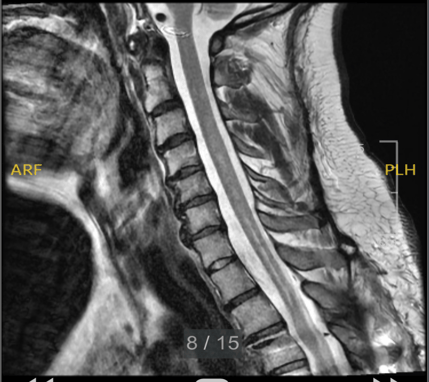
After the operation, symptoms gradually returned to normal starting on the second day.
Importance of Checkups for People with Spinal Cord Injuries
The gradual enlargement of a syrinx can silently worsen your neurological condition for many years after the injury. What this means is that:
- You may feel “stable” for many years, and then the symptoms become unbearable, your condition worsens, and the syrinx is already too large.
- New symptoms are not always “just a sign of aging with spinal cord injury.”
If you have a spinal cord injury and notice new or changed symptoms, especially changes in sensation or unexplained weakness, insist on an MRI. Early MRI, referral to a specialist, and informed self-advocacy can preserve functionality and quality of life.
Final Thoughts
My surgery to release fluid from the spinal cord wasn’t optional, but necessary. I want to raise awareness among people with spinal cord injuries because too many of them only learn about syringomyelia when it has already caused damage. Too many people experience severe pain and spasms and don't know why. I’d be happy to share anything about my journey, please use the contact information provided.

If this post makes even one person say, “Hey... maybe I should ask my doctor about this,” then it has served its purpose.
This content is for informational purposes only and is not intended as a substitute for professional medical advice, diagnosis, or treatment. Always seek the advice of your GP or other qualified health provider with any questions you may have regarding a medical condition. Never disregard professional medical advice or delay seeking it because of something you have read or seen here.