
Multiple System Atrophy (MSA) is a condition in which the functioning of brain structures changes. Autonomic control centres affected by MSA are responsible for coordinating and regulating automatic processes. Symptoms can manifest themselves in different ways and gradually change a person's daily functioning, which is why MSA often requires close monitoring by healthcare professionals.
In this article, we will explore the key aspects of this condition, such as typical signs, possible mechanisms of progression, approaches to diagnosis, and support options that can be applied depending on the individual's needs. This overview provides an understanding of the changes most commonly experienced by people with MSA and what can help in everyday life.
What is MSA Disease?
Multiple System Atrophy (MSA) is a rare neurodegenerative condition in which several brain systems gradually deteriorate. First and foremost, the control of movement, balance, and autonomic functions such as blood pressure and urination is affected. According to a National Institute of Neurological Disorders and Stroke (NINDS) review, “MSA is associated with the gradual build-up of an abnormal protein in support cells of the nervous system, which interferes with normal nerve function and contributes to progressive nerve damage.”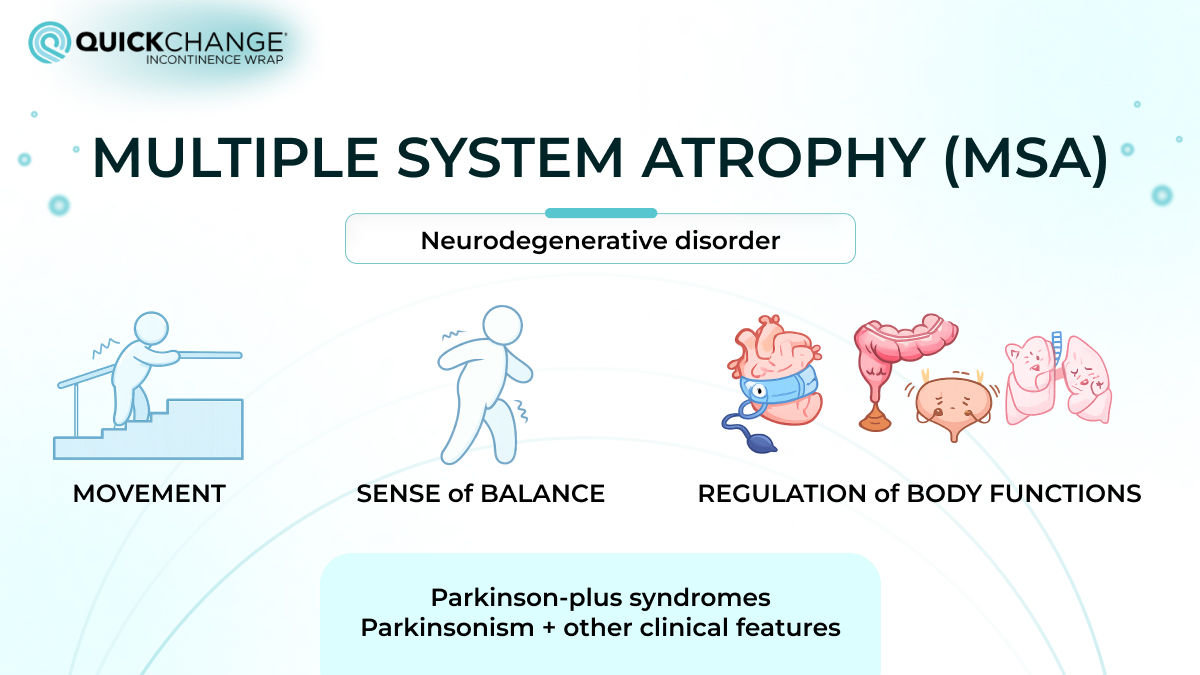
The historical name “Shy-Drager syndrome” is sometimes found in medical literature, but the modern and universal term is Multiple System Atrophy. The characteristics of MSA depend on which brain structures are predominantly affected, which determines a wide range of possible manifestations.
Key Differences Between MSA and Parkinson's Disease
Since the symptoms of multiple system atrophy can be somewhat similar to those of Parkinson's syndrome, it is important to distinguish between these conditions in the early stages. MSA is characterized by a faster overall rate of progression and a combination of movement or coordination symptoms with other neurological changes that are not typical for Parkinson's disease, where such symptoms usually appear much later.
Another important difference is the response to levodopa, a medication used to treat Parkinson’s symptoms by increasing dopamine levels. For people with MSA, the benefit is often limited or short-lived, whereas in Parkinson’s disease, it is usually stronger and more sustained. In addition, MSA more commonly involves coordination difficulties, which are not typical of classic Parkinson’s disease.
Multiple System Atrophy Symptoms
MSA manifests itself in different ways depending on which parts of the nervous system are most affected. Symptoms are divided into three broad groups: motor (MSA-P), coordination (MSA-C), and autonomic. For most people, they gradually combine, but in the early stages, a certain type of symptom may dominate, forming a clinical variant of the disease. More details about the three main MSA symptoms can be found below:
|
Symptom categories |
Primary symptoms |
Disease progression |
|
MSA-P (motor) |
Rigidity, bradykinesia, and early postural instability |
Often weak or short-lived response to levodopa; symptoms may progress faster than in Parkinson's disease |
|
MSA-C (coordination) |
Ataxia, gait instability, difficulty with fine motor skills |
Movements are not so much slowed as they are unsynchronized; cerebellar involvement is predominant |
|
Autonomic disorders |
Orthostatic hypotension, bladder dysfunction, changes in sweating and thermoregulation |
One of the most characteristic components of MSA; early or rapidly progressive development of autonomic changes |
These overlapping symptom patterns reflect the multisystem nature of MSA and help explain why the condition can present differently from person to person.
Causes and Mechanisms of MSA Progression
The main multiple system atrophy causes are not yet clear, as researchers believe that MSA may develop as a result of a combination of factors such as minor genetic risks, environmental factors that have not yet been clearly identified, and random cell damage. However, unlike neurological diseases, MSA is neither hereditary nor contagious, and does not have a clear genetic pattern.
One of the main biological features of multiple system atrophy is the unusual accumulation of a protein called alpha-synuclein in the cells that support brain function. Under normal conditions, these cells support and protect nerve cells. However, abnormal protein accumulation interferes with this process, contributing to the progressive loss of nerve cells. This damage affects areas of the brain that control movement, balance, and automatic body functions such as blood pressure and bladder control.
MSA Disease Progression Stages
Multiple System Atrophy progresses gradually, and the nature of the symptoms may vary depending on which systems of the body are affected. There is no clear official classification of multiple system atrophy stages, but the division below provides a better understanding of the general aspects of the condition.
-
Early stage
The first changes may occur in autonomic functions or mild coordination and movement disorders. At this stage, symptoms are often subtle and may resemble those of other conditions. -
Intermediate stage
Neurological symptoms become more pronounced. Balance and gait disturbances become more noticeable, blood pressure may fluctuate more sharply, and functional independence in daily activities may begin to decline. The clinical picture varies from patient to patient: some have predominantly Parkinsonian symptoms (slowness, rigidity), while others have ataxia (poor coordination of movements due to nervous system disorders) and impaired coordination. At this stage, partial assistance with mobility or daily activities may be required. -
Late stage
Signs of MSA may spread to most functional systems, limiting mobility and increasing the need for assistance with daily activities. At later stages, new complications may develop, including problems with swallowing or breathing, which may require closer medical supervision.
MSA Diagnosis and Clinical Assessment
Multiple system atrophy is a complicated diagnosis since the initial symptoms are similar to those of other neurodegenerative disorders, especially Parkinson's disease and ataxias. The ultimate diagnosis is made on the basis of a complex of clinical manifestations, their dynamics, and the outcomes of instrumental research, and not based on one test or laboratory indicator.
In the first examination, the physician takes into account the character and the complex of symptoms, including motor, coordination, and autonomic symptoms. The presence of Parkinsonian or cerebellar disorders with severe autonomic dysfunction is one of the most important diagnostic signs, which manifests itself earlier or more rapidly than in other similar disorders.
Tests can be applied during the examination to evaluate balance, motor skills, reflexes, orthostatic blood pressure changes, and bladder function. It is also important to track how symptoms have changed over time, as MSA is characterized by relatively rapid progression and poor response to levodopa, which is another diagnostic marker.
Instrumental Diagnostics
Instrumental diagnostics help to clarify the picture, but cannot fully confirm MSA on its own. Most often, MRI of the brain is used, where characteristic changes such as atrophy of the cerebellum, pons, or basal ganglia can be observed. In some cases, specific patterns are visible on MRI, such as the “hot cross bun sign,” which, although not absolute, support the diagnosis of MSA. We can see this in more detail in the photo below:

Tests of autonomic nervous system function may also be performed: orthostatic tests, sweat assessment, uroflowmetry, or residual urine volume studies. These methods allow for a quantitative assessment of the degree of autonomic dysfunction and distinguish MSA from other causes of dysautonomia.
Multiple System Atrophy Life Expectancy
Multiple System Atrophy is a progressive disorder, and the symptoms can be more severe with time. The progression is different for each person, but overall, MSA advances faster than most of the conditions that have similar manifestations. When evaluating prognosis, clinicians consider motor, coordination, and autonomic function, as well as how these affect daily life.
Clinical dynamics can also be influenced by the type of MSA. The MSA-P type is typically followed by more severe Parkinsonian symptoms, whereas MSA-C is typified by ataxic disorders. Although the leading symptoms are different, the general progression rate of both types is comparable. Autonomic alterations, including blood pressure variability or urinary dysfunction, are significant.
Other factors also affect the disease progression: age of onset, comorbidities, physical activity, and the occurrence of complications associated with swallowing, balance, or infections. The overall clinical picture is also characterized by a limited response to standard Parkinson medications. In determining the prognosis, one should not only look at the rate of progression but also the impact of the changes on the daily activities.
Life Expectancy and Quality of Life
On average, life expectancy after the onset of key symptoms is estimated at approximately 6-10 years, although the actual course may be slower or faster depending on individual characteristics. In the later stages, complications have a significant impact, including the risk of infections, difficulty swallowing, reduced mobility, and weight loss.
Clear and practical support strategies help improve quality of life: control of orthostatic blood pressure fluctuations, optimization of safety in the home environment, individually tailored physical exercises to maintain functionality, and early treatment of complications to prevent them from worsening.
Multiple System Atrophy Treatment and Supportive Care
Since no treatment can halt the progression of multiple system atrophy, care focuses on managing individual symptoms and supporting daily functioning. The approach is tailored to each individual, taking into account the leading symptoms, the dynamics of changes, and the person's needs. Medicinal and non-medicinal methods can help in the following areas:
-
Orthostatic hypotension: fluid and salt correction, elastic stockings, if necessary, drugs that affect blood pressure may be prescribed;
-
Movement disorders: trial course of levodopa, physiotherapy, balance training with safety considerations;
-
Coordination changes: exercises to improve stability and control of movements, speech therapist support for speech changes;
-
Urinary dysfunction: fluid regulation, medication, catheterisation, or use of assistive devices;
-
Swallowing difficulties: selection of safe feeding strategies and techniques, specialist consultations;
-
Sleep and breathing disorders: assessment of stridor, use of breathing support devices if necessary.
Supportive therapy often also includes adapting the home environment, helping with daily activities, and teaching family members or carers safety strategies. This approach allows for a better response to changes in condition and maintains the highest possible level of independence and comfort.
How to Manage Incontinence for People with MSA
Impaired urinary control is one of the common signs of multiple system atrophy. This is associated with changes in the functioning of the nerve pathways that regulate bladder muscle contractions and coordinate the process of urine removal. Some people experience incontinence, others experience urinary retention, or a combination of these conditions. The progression of incontinence can be gradual and vary in nature depending on which structures are involved.
Care in such situations is aimed at maintaining comfort, hygiene, and safety. Practical measures include regulating fluid intake, applying routine strategies, assessing the condition of the bladder, selecting appropriate care products, or using catheterisation methods as recommended by specialists. In some cases, solutions that simplify the change of care products or make daily care easier for carers may be helpful because they can be adapted depending on the conditions in the home and the needs of the person.
Practical Methods for Controlling Incontinence
The approach to managing incontinence in multiple system atrophy depends on the type of impairment and its progression. The goal is to maintain comfort, hygiene, and safety, as well as to reduce the risk of complications. Basic practical methods may include:
-
Regulating fluid intake and monitoring the body's response;
-
Scheduling urination for more predictable bladder control;
-
Assessing bladder function and tracking voiding volume;
-
Using care products selected according to mobility level and type of incontinence;
-
Medication adjustment, if appropriate;
-
Catheterization in situations where stable urine drainage is required;
-
Skin protection measures aimed at reducing irritation and improving hygiene.
Among the solutions that can support daily care are products such as QuickChange Wraps. They are designed to help caregivers change continence products quickly and discreetly, without lifting the person and with minimal discomfort. This approach may help make continence care less disruptive during rest periods, support carers during continence care routines, and help maintain skin cleanliness, which is especially important for people with reduced mobility, as prolonged moisture and pressure increase the risk of skin irritation and breakdown.
Discover how QuickChange simplifies incontinence care: order the 10-Count Trial Pack for home use or the Professional-Use Sample Pack for medical and care facilities.
Assistive Technologies & Smart Home Solutions for MSA
Modern digital technologies can support people with MSA by improving safety, helping families manage care demands, and letting people stay independent for as long as possible. Some of the most helpful assistive devices for MSA are:
-
Personal emergency call buttons or alarm systems for use at home;
-
Automatic lifts, adjustable beds, and chairs that make it easier to change position;
-
Touchscreen monitors and systems that can track heart rate, blood pressure, breathing rate, or movements during sleep, etc.;
-
Communication devices, including tablets with adaptive interfaces and voice generators, which become indispensable when speech weakens;
-
Apps for medication reminders and procedure planning to create a structured daily routine without unnecessary stress.
Such technologies are becoming a key tool in supporting the quality of life of people with MSA and are also being successfully applied in the broader context of technology for neurodegenerative diseases. They provide a sense of control, security, and predictability for both patients and their families.
Conclusion
Multiple System Atrophy affects various functional systems of the body, and a person's needs may change over time. Understanding the characteristics of the condition, timely diagnosis, and supportive approaches helps to better organize daily care and support consistent daily routines.
For people with MSA who experience incontinence or limited mobility, suitable care products can make daily routines easier and reduce stress during continence care. Products such as QuickChange Wraps allow carers to change protective materials with less repositioning, supporting cleanliness, comfort, and dignity during care.

FAQ
How rare is MSA?
MSA is a rare neurodegenerative disease. Its prevalence is estimated at a few cases per 100,000 people, and it is most commonly diagnosed between the ages of 50 and 60.
Does MSA affect memory and cognition?
Cognitive impairment in MSA is usually minimal or moderate. Unlike Alzheimer's disease or dementia, progressive cognitive changes are not a leading feature of this condition.
Can I continue working after a diagnosis of Multiple System Atrophy (MSA)?
This depends on the nature of the symptoms and the specifics of the job. Some people can continue working in the early stages, but a gradual decline in mobility and autonomous functions eventually limits professional activity.
Are there triggers that worsen MSA symptoms?
Symptoms may temporarily worsen with heat, dehydration, infections, or medications that lower blood pressure. Controlling these factors helps reduce daily fluctuations in condition.
Does the course of MSA vary depending on the type: MSA-P or MSA-C?
Yes, the initial course and dominant symptoms can differ, but the overall rate of progression is generally similar. MSA-P more commonly affects movement and Parkinsonian features, while MSA-C primarily affects coordination and balance. Over time, however, symptoms from both types often overlap.
Are there specific tests that definitively confirm MSA?
There is no specific test. The diagnosis is based on the clinical picture and the exclusion of other conditions. Instrumental methods only support diagnostic assumptions.
Can MSA start with one dominant symptom and change over time?
Yes. At the beginning, symptoms may only affect autonomic functions or only movements, but in most cases, several systems are affected simultaneously over time.
This content is for informational purposes only and is not intended as a substitute for professional medical advice, diagnosis, or treatment. Always seek the advice of your GP or other qualified health provider with any questions you may have regarding a medical condition. Never disregard professional medical advice or delay seeking it because of something you have read or seen here.