If you are using QuickChange Wraps for the first time, the first few days can feel uncertain, and that’s completely normal. Early leaks, positioning issues, or discomfort usually come down to small setup details, not the product itself. When you're learning how to use a men's incontinence wrap for the first time, these initial adjustments are all part of the process.
In most cases, the issue is one of three things: incorrect orientation, over-tightening, or positioning. QuickChange works differently from standard absorbent products, so getting used to it takes a bit of adjustment. This guide walks you through what to expect in the first weeks, along with practical first-time male incontinence product tips to help you get consistent, reliable results.
What to Expect in the First Weeks
The first week is about getting used to how it works. During this time, both users and caregivers are learning:
● How often to check;
● When to change;
● What placement works best for the person using it;
● How the wrap behaves with sitting, lying, or repositioning.
Small leaks or fit adjustments early on do not mean the product failed. They’re a normal part of getting comfortable with the setup. Most caregivers report that confidence builds after just a few successful changes.
Why QuickChange May Leak During Early Use
In the first few days, leaks can occur while you’re still getting used to the technique. In most cases, this happens because the wrap is not positioned or oriented correctly. If the wrap is slightly off in direction or placement, it may not channel moisture into the absorbent core as intended. Even a small misalignment can affect how the wrap performs.
QuickChange is designed to work differently from standard absorbent products, so small setup details matter more than expected. Once identified, these issues are usually easy to correct.

Common Early Mistakes: Over-Tight Wrapping and Sealing
When leaks happen, the natural reaction is to tighten it. However, tightening the wrap doesn’t improve performance – it works against the design. Common first-time mistakes include:
- Rolling the wrap into a tight cone or funnel
The wrap should never be rolled tightly. It should stay open and relaxed in shape; - Sealing wrap too tightly
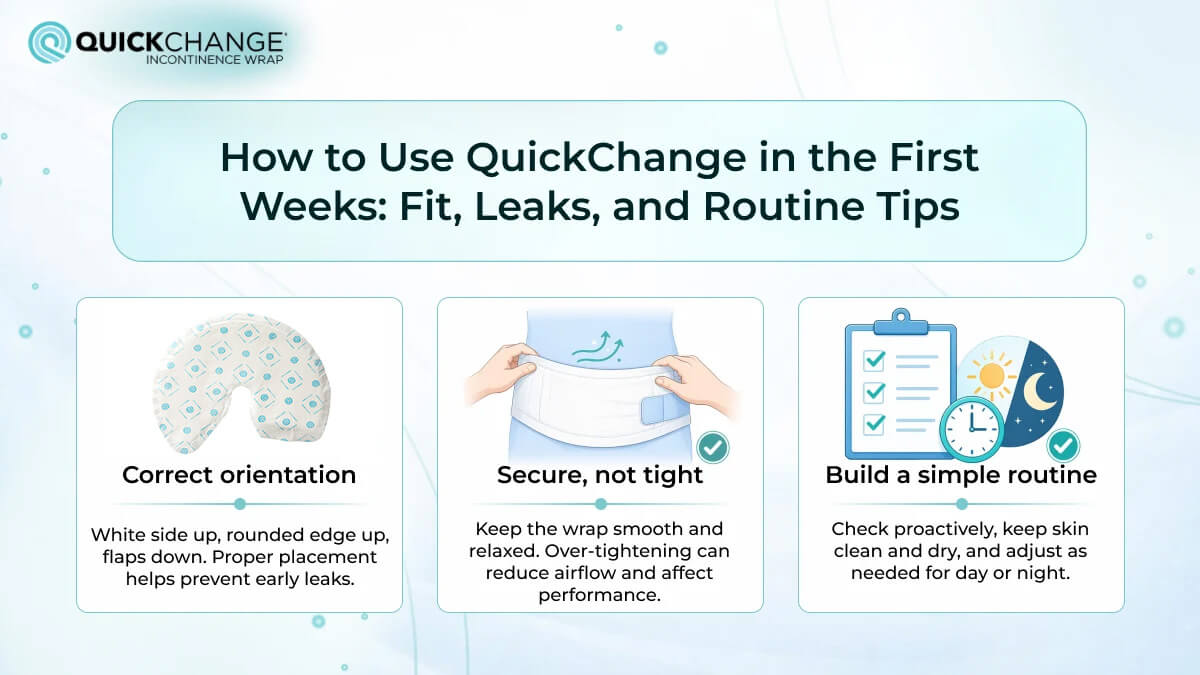
QuickChange works by wicking urine away from the skin into the absorbent core while allowing airflow from the open top. Tight sealing reduces airflow and surface area for absorbing. The goal is secure, not tight.
Not sure if you’re applying it correctly? Take a look at the how-to guide to avoid common early mistakes. Often, a small positioning adjustment makes a big difference.
How It Should Feel When It Fits Right
Getting the right male incontinence wrap fit is key to both comfort and performance. When applied correctly, the wrap should feel secure without creating pressure. It should feel like a gentle hold, not tight pressure. A small gap is normal and helps the wrap function as intended.
If the wrap feels too tight, it can reduce airflow and affect the effectiveness of absorption. On the other hand, if it feels too loose, it may shift out of position. Keeping the wrap smooth and properly aligned usually makes the biggest difference in achieving a consistent, reliable fit.
How to Position QuickChange Correctly
The correct orientation is:
● White absorbent side facing up;
● Rounded edge toward the upper body;
● Two flaps pointing toward the lower body.
How QuickChange Works: Understanding the Design
QuickChange isn’t just an absorbent product – it’s a urine management system. Inside each wrap are absorbent polymers that turn liquid into a gel, locking urine away from the skin. Key design features:
● Absorbs up to about 500mL (17 oz) of urine;
● Keeps urine off the skin, helps keep skin dry and comfortable;
● The open top allows heat and moisture out, keeping the area cooler and drier;
● Can be applied without lifting and often changed in under a minute.
The wrap is designed as a one-size solution and is used in both home and professional care settings. Once you get how it works, everything becomes much easier.
QuickChange Day vs Night Use
You may notice slightly different needs depending on the time of day.
Daytime
● Proactive changes build confidence;
● Mid-day adjustments may be needed during prolonged sitting.
Overnight
● Correct orientation matters more than tightness;
● Some users prefer using the wrap inside a brief for extra stability.
Tips for Family Caregivers
Providing care comes with its own challenges, especially when building a consistent caregiver routine. Small adjustments in how QuickChange is used can make the process easier and less physically demanding. You don’t need full repositioning for most changes. QuickChange is designed to be applied from the top down around the penis, which means many changes can be done with minimal movement changes. Helpful habits:
● Pause briefly before securing to confirm positioning;
● Keep the wrap smooth – avoid twisting edges;
● It should feel like a gentle hold, not tight pressure. A small gap is normal;
● Make sure that the rounded side is pointing toward the upper body.
A quick check before securing saves time later.
QuickChange works best when applied to clean, dry skin. At each change, the skin should be cleaned thoroughly, allowed to dry completely, and, if recommended, supported with a barrier cream. Allowing some air exposure when possible can also help maintain comfort.
Dry skin helps everything work better and feel more comfortable. If the wrap is staying in place, absorbing, and keeping the skin dry – you’re doing it right. Looking for a way to make changes easier and less physically demanding? See how QuickChange supports faster, low-movement care.
Tips for Self-Users
Fit is personal – and sitting changes everything. Over time, this becomes part of a simple male urinary management routine. During the first few days:
● Adjust snugness while seated;
● Expect small mid-day adjustments;
● Focus on comfort and dryness, not symmetry.
You’ll quickly feel what works best for you.
Many users develop their own ways to use QuickChange, and that’s perfectly fine. Just remember: If you experience leaks, check orientation first before tightening. Incorrect direction is one of the most common causes of early issues. Helpful setup tips:
● Use a mirror at first if needed;
● Some users rely more on feel than visual alignment;
● Keep wraps within easy reach;
● Plan proactive daytime checks.
Most users develop a comfortable routine within about a week.
Tips for Professional Caregivers
In clinical settings, QuickChange troubleshooting often comes down to two recurring issues:
1. Wrap applied upside down;
2. Over-tightening to prevent leaks.
Once corrected, performance usually improves right away. Curious how QuickChange fits into clinical or care routines? Learn how it can support more efficient day-to-day care.
When to Reach Out for Help
If you’re experiencing:
● Repeated leaks;
● Skin irritation;
● Fit confusion;
● Uncertainty about orientation.
If something doesn’t feel right, don’t guess.
Watch the application videos again – and reach out. The QuickChange team regularly helps caregivers and facilities troubleshoot techniques and even provides live virtual training. Most issues are resolved with small adjustments rather than changes to the product itself.

Conclusion
The first weeks with QuickChange are about learning what works for you. Routines get easier, confidence builds quickly, and stress goes down. Whether you’re a caregiver, clinician, or independent user, you’re doing something proactive for comfort, dignity, and skin health, and we’re here to help you get it right.
FAQ
Why is QuickChange leaking at first?
Early leaks are usually caused by incorrect application, not the product itself. The most common reasons are wrong orientation or wrapping it too tightly. QuickChange needs proper positioning and airflow to absorb effectively.
How tight should it feel?
QuickChange should feel secure, but not tight. It should gently hold in place without compression. Over-tightening can reduce absorption and increase the risk of leaks.
Is it normal to adjust it during the day?
Yes. Small adjustments are common, especially during the first few days. Sitting, movement, and positioning can affect fit, so minor readjustments help maintain comfort and performance.
Can it be used overnight right away?
Yes, but correct positioning is especially important overnight. Some users prefer combining it with a brief for added stability while they’re still learning the best fit.
This content is for informational purposes only and is not intended as a substitute for professional medical advice, diagnosis, or treatment. Always seek the advice of your GP or other qualified health provider with any questions you may have regarding a medical condition. Never disregard professional medical advice or delay seeking it because of something you have read or seen here.