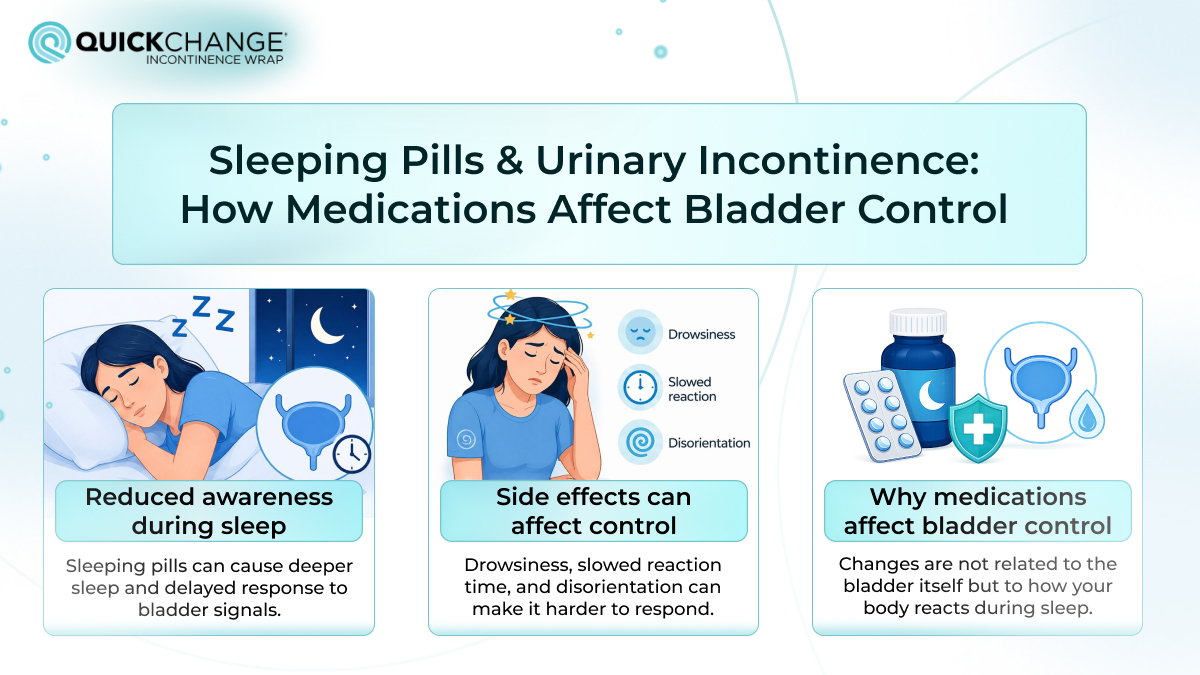
Spinal spasticity is a common symptom of neurological conditions such as spinal cord injury or multiple sclerosis. It affects not only mobility but also daily comfort, making basic activities and self-care more difficult. In many cases, medication becomes the primary method of managing these symptoms.
At the same time, medications for treating spasticity can have systemic effects that affect other bodily functions, including bladder control. In this article, we look at how spasticity medications work, their potential side effects, and what to consider in daily care.
Understanding Spinal Spasticity and Its Impact on Bladder Function
Spinal spasticity is a condition characterized by increased muscle tone resulting from disrupted signals between the brain and the spinal cord. It is most commonly associated with neurological conditions such as spinal cord injury, multiple sclerosis, or other disorders of the central nervous system.
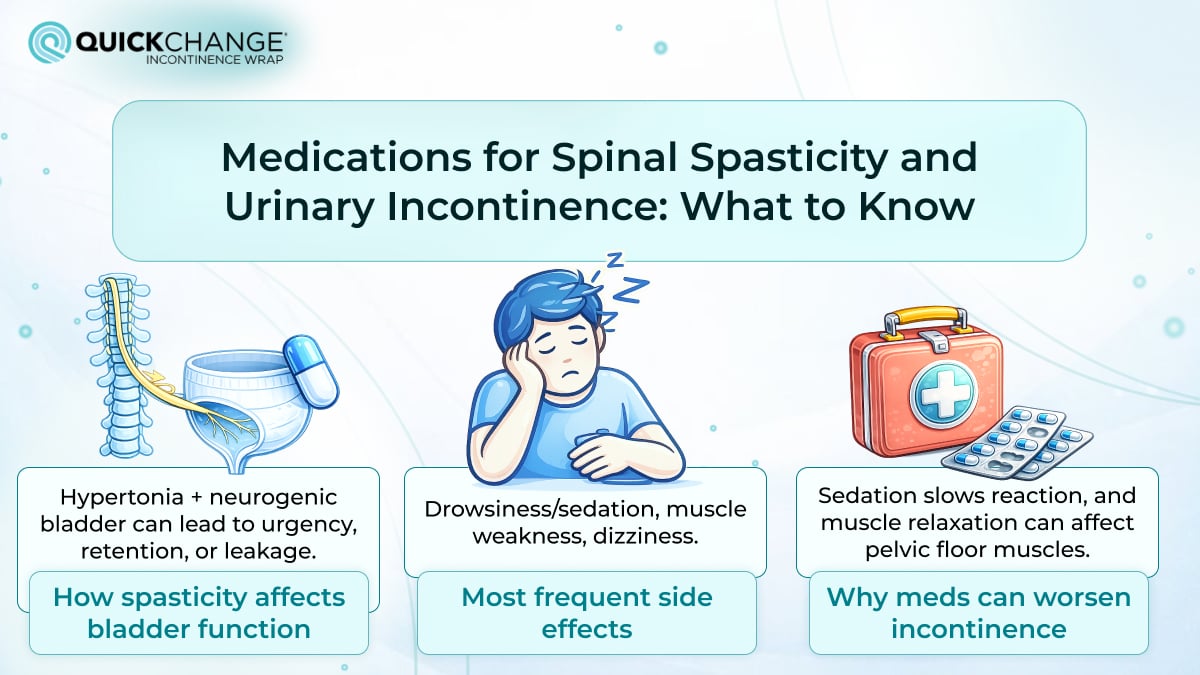
In addition to limiting mobility, spasticity often affects bladder function. Urinary control depends on neural regulation, so its disruption can lead to neurogenic bladder. As a result, an interrelated process develops:
- Muscle hypertonia affects the pelvic floor muscles;
- A neurogenic bladder alters normal urinary control;
- This can manifest as urinary urgency, retention, or leakage.
This connection is important to consider when evaluating treatment approaches, as changes in spasticity management may also affect bladder function.
How Medications Help Manage Spasticity
Medical treatment is one of the primary approaches to managing spinal spasticity. Its main goal is not to completely “turn off” muscle tone, but to reduce it to a level that allows for the maintenance of functionality and comfort in daily life.
According to Medscape, most antispastic medications work by enhancing inhibitory signals in the central nervous system or reducing excitatory transmission at the spinal level. Depending on their mechanism of action, medications may:
- Enhance inhibitory signals (for example, via GABA receptors);
- Reduce the transmission of excitation at the spinal cord level;
- Directly affect muscle fibers, reducing their responsiveness.
These medications have systemic effects, so drowsiness, weakness, or slowed reactions may occur alongside a reduction in spasticity. The response to treatment can vary significantly depending on the cause of spasticity, the extent of nervous system involvement, and accompanying symptoms.
Treatment is usually started with minimal doses and gradually adjusted based on individual response. In practice, medications are often combined with rehabilitation and physical therapy to improve overall outcomes and support daily function.

Types of Muscle Relaxers for Spasticity
The pharmacological management of spinal spasticity is based on several classes of drugs that have an effect on the nervous system or directly on the muscles. The main aim is to decrease the excessive muscle tone, ease movement, and relieve pain without causing severe functional loss.
The selection of a particular drug is based on the clinical scenario: the etiology of spasticity (e.g., spinal cord injury or multiple sclerosis), its severity, and other symptoms, such as urinary dysfunction. Treatment is usually initiated with oral medications, and if they don’t provide enough control, more specific or invasive approaches can be considered.
Oral Antispastic Medications
The initial treatment of spinal spasticity is usually oral drugs, which offer systemic effects and can be adjusted in terms of dose depending on the response of the patient. They can be used in the long-term management of symptoms, especially in chronic neurological disorders. The main types of muscle relaxers used for spasticity can be compared below:
|
Medication |
Mechanism |
When Used |
Key Limitations |
|
Baclofen |
GABA receptor agonist; reduces excitatory transmission in the spinal cord |
First-line therapy for moderate to severe spasticity (SCI, MS) |
Drowsiness, muscle weakness, systemic side effects at higher doses |
|
Tizanidine |
Alpha-2 adrenergic agonist; reduces neuronal activity in the spinal cord |
Alternative or add-on to baclofen, especially if not tolerated |
Dry mouth, hypotension, short duration requiring frequent dosing |
|
Diazepam |
Benzodiazepine; enhances GABA-mediated inhibition in the CNS |
Short-term use or nighttime relief of spasticity |
Sedation, risk of dependence, impaired coordination |
|
Dantrolene |
Acts directly on muscle fibers, reducing contractility |
When central agents are ineffective or not tolerated |
Risk of hepatotoxicity, requires liver monitoring, and generalized weakness |
Intrathecal and Advanced Therapies
More specific and invasive methods are taken into consideration in situations when oral medications fail to give sufficient control over spasticity or have serious side effects. These enable more accurate control of symptoms and lessen the total medication burden on the body.
For more advanced cases, intrathecal baclofen therapy is often used. This is done by pumping the drug into the cerebrospinal fluid through an implanted pump. This is applied to severe cases of spasticity, especially when it is a major limiting factor to mobility, care or quality of life.
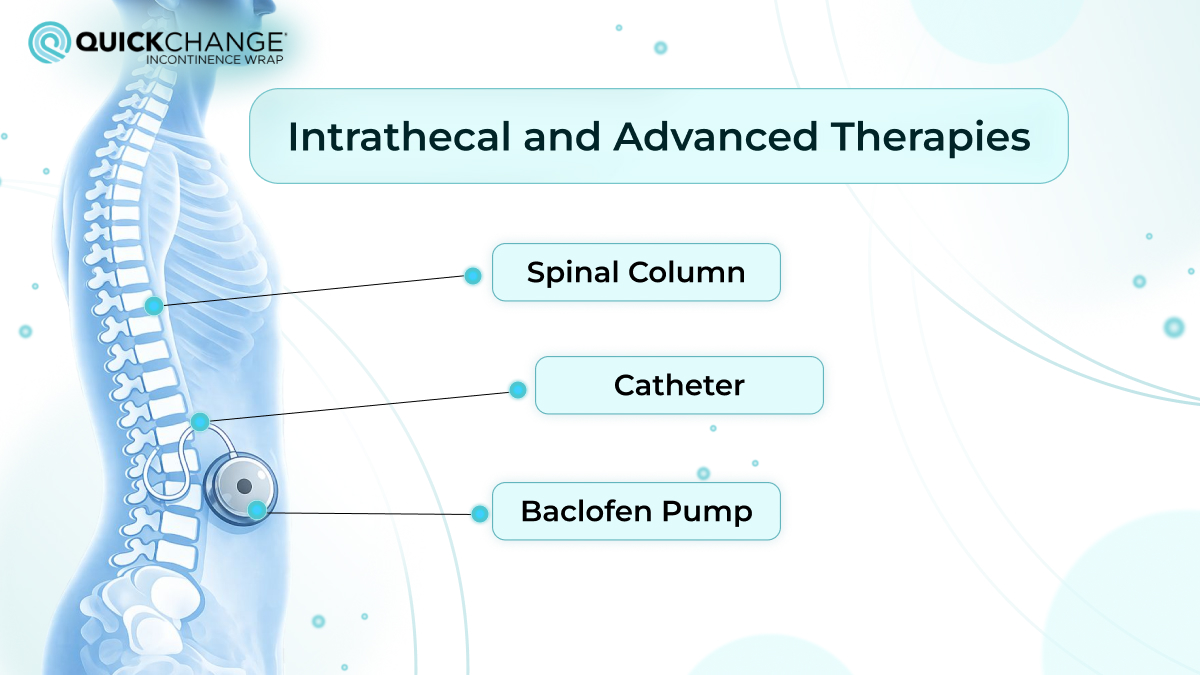 PubMed Central shows that intrathecal baclofen therapy can provide effective spasticity control with lower systemic exposure compared to oral treatment. Since the drug is introduced directly into the cerebrospinal fluid, this method enables more specific control of symptoms with reduced doses. Nevertheless, this procedure involves surgical implantation of the device, periodic maintenance of the pump, and medical control, which is why it is usually regarded as a later step of treatment, but not a primary treatment.
Muscle Spasm vs Spasticity
Muscle spasms and spasticity are often confused, although they are distinct conditions that differ not only in their causes but also in how they manifest in daily life. Spasticity is typically linked with neurological conditions, including spinal cord injury or multiple sclerosis, and occurs over time when the message transmission between the brain and the spinal cord is impaired.
In contrast to short-lived spasm, spasticity is more chronic and may be present throughout the movement, posture, and control of the body, so it most of the time needs long-term medication with periodic changes to the treatment regimen based on the state of the individual.
Muscle spasms, in their turn, tend to be sudden and short-lived, and are typically connected with some factors, such as fatigue, dehydration, or local irritation of muscles or nerves, and may not necessarily reflect any damage to the central nervous system. This is why they are treated differently: although spasticity most of the time needs to be managed systematically, spasms in most cases can be treated either with temporary treatment or with little involvement.
Side Effects and Risks of Spasticity Medications
Spasticity medications are effective in lowering muscle tone, although their effects are not selective. As the majority of them influence the central nervous system, they may not only change the motor activity but also the overall state of the body, its energy level, concentration, and responses.
Thus, the balance between benefits and side effects should be taken into account when choosing a treatment. In other instances, over-reduction of muscle tone or excessive sedation can even lead to impaired functionality and other systems, especially bladder control. The most frequent side effects are:
- Drowsiness and sedation: reduced alertness that can affect daily activities and response time;
- Muscle weakness: decreased muscle strength, which may make movement or transfers more difficult;
- Dizziness: lightheadedness, especially when standing up or changing position;
- Hypotension: lowered blood pressure, which may contribute to fatigue or dizziness;
- Cognitive slowing: reduced mental clarity and slower processing, affecting focus and decision-making.
It is also important to consider the specific risks associated with certain classes of medications. For example, benzodiazepines (particularly diazepam) can lead to dependence with long-term use, so they are typically prescribed on a limited basis or for short courses of treatment.
In addition, long-term use of certain medications may require additional medical monitoring. This is due to both the accumulation of side effects and the potential impact on internal organs (for example, the liver when using dantrolene).
The Link Between Spasticity Medications and Urinary Incontinence
Medications that are taken to manage spasticity may not only influence muscle tone, but also the bladder. This is because of their systemic mechanism of action, especially when the drugs are used in situations where they influence the central nervous system and slow down the general neural activity.
One of the key factors is the sedative effect. The decreased alertness and slow reaction may influence the sense and processing of the need to urinate in time. As a result, a person may simply not have time to react, especially at night or when mobility is limited.
The overall relaxation of muscles is also a significant factor. Medications that reduce spasticity can affect not only the muscles of the limbs but also the pelvic floor muscles. This can impact urinary control, particularly in individuals with pre-existing neurological conditions. This can be described as medication-related urinary incontinence, where not only the underlying disease but also the effects of therapy play a key role. In practice, this includes:
- Nocturnal incontinence: may result from a combination of sedation and reduced bladder control;
- Sudden urges with leakage: episodes of urgency that cannot be addressed in time;
- Urinary retention followed by leakage: impaired bladder emptying leading to urine accumulation and subsequent leakage.
These symptoms are not always directly related to the progression of the condition. In some cases, they may be influenced by medication or dosage. If new urinary symptoms appear or existing ones change, it may be helpful to take a closer look at the current treatment approach.
Managing Urinary Symptoms While Treating Spasticity
The treatment of spasticity often requires a balance between reducing muscle tone and maintaining bladder control. Excessive sedation or excessive muscle relaxation can worsen incontinence symptoms, while insufficient control of spasticity can complicate care and daily activities.
The best approach is often to treat the individual in a way that considers both of these aspects. This may include gradual dose adjustments to minimize side effects without compromising efficacy, as well as changes to medication timing. As an example, the transfer of part of the dose to the evening can be used to manage nighttime spasticity, but it also involves the evaluation of the risk of nighttime leakage.
In some cases, medications that affect bladder function are added to the treatment regimen. This approach allows for simultaneous management of both aspects, i.e., muscle tone and urological symptoms, without significantly reducing the effectiveness of the primary therapy. Therapy adjustments are made based on changes in symptoms and help maintain this balance and adapt the approach according to the patient’s condition.
Practical Support Strategies for Daily Care
Managing the daily symptoms of incontinence associated with spasticity requires simple yet systematic solutions. Even with properly selected treatment, episodes of leakage may occur, so it is important not only to respond to them but also to anticipate such situations. Basic approaches include:
- Regular monitoring: tracking changes in symptoms, especially after adjustments to medication;
- Nighttime routine: planning fluid and medication intake to account for the risk of leakage;
- Ongoing replacement of aids: to reduce skin contact with moisture and prevent irritation.
For people with limited mobility, these factors become even more important. Difficulty accessing the restroom, slow movement, or the need for assistance increase the risk of both delays and leakage. In such situations, solutions that allow for quick and easy management of the situation play a key role.
In cases where a swift replacement without a full change of clothes or complicated repositioning is essential, wrap-style solutions such as QuickChange can be used. They help simplify the care process and reduce the number of necessary steps.
For home use, you can explore a trial pack to see how it fits into your routine. For professional or caregiver settings, sample options are available to support evaluation in real care environments.
When to Seek Medical Advice
While changes in symptoms may be part of the natural course of the disease or a response to treatment, certain situations require immediate consultation with a doctor. Timely evaluation helps prevent complications and adjust treatment before symptoms begin to significantly impact quality of life. You should see a doctor in the following cases:
- A sudden worsening of spasticity symptoms or overall condition;
- The onset of new incontinence after starting or changing medications;
- Severe weakness or pronounced sedation affecting daily activities;
- Problems with urination (retention), including a feeling of incomplete emptying or an inability to urinate.
Such changes may indicate either side effects of the treatment or the need to adjust it. In many cases, adjusting the dosage or selecting an alternative medication can stabilize the patient’s condition without compromising the effectiveness of the treatment.
Conclusion
Medications play a key role in managing spinal spasticity by helping to reduce muscle tone and facilitate daily activities. However, their effects are not selective, so while mobility improves, side effects may occur, including those that affect bladder control. Treatment requires an individualized approach and regular adjustments based on changes in symptoms.
The best results usually come from combining spasticity management with practical solutions for daily care. In this context, solutions like QuickChange can help manage leakage more easily and make routines simpler for both the user and the caregiver. This helps keep daily care manageable and reduces unnecessary strain for both the user and the caregiver.
FAQ
What medications are used for spasticity?
Common medications for spasticity include baclofen, tizanidine, diazepam, and dantrolene. These drugs help reduce muscle tone and are often referred to as muscle relaxers or antispastic medications, depending on how they work.
Are muscle relaxers used for muscle spasms and spasticity?
Yes, many prescription muscle relaxers are used to manage both muscle spasms and spasticity. While the terms are sometimes used interchangeably, spasticity is typically related to neurological conditions and may require more targeted treatment.
What are the side effects of muscle relaxers?
Side effects of muscle relaxers may include drowsiness, muscle weakness, dizziness, and low blood pressure. Some medications can also affect concentration or cause sedation, especially at higher doses.
What is the strongest muscle relaxer for spasticity?
There is no single strongest muscle relaxer. The effectiveness of a medication depends on the individual, the underlying condition, and how the body responds to treatment.
Can spasticity medications affect bladder control?
Yes, some spasticity medications can influence bladder function. Sedation and muscle relaxation may reduce the ability to respond to urinary urgency or affect overall bladder control.
How can urinary symptoms be managed during treatment?
Managing urinary symptoms may include adjusting medication timing, monitoring fluid intake, and using practical solutions that simplify care, especially for individuals with limited mobility.
This content is for informational purposes only and is not intended as a substitute for professional medical advice, diagnosis, or treatment. Always seek the advice of your GP or other qualified health provider with any questions you may have regarding a medical condition. Never disregard professional medical advice or delay seeking it because of something you have read or seen here.